

| Standard Report | Premium Report | |
|---|---|---|
| Current State of the Industry |  |
|
| Market Size (industry trends) | |
|
| Market Forecast (5-year projection) | |
|
| Products/Services Breakdown | |
|
| Revenue per State | |
|
| Financial Metrics | |
|
| Salary & Compensation Statistics | |
|
| Public Company Information | |
|
| Key Private Companies | |
|
| Government Vendors | |
|
| Instant Download - Available immediately upon purchase | |
|
Download both PDF and Excel


|
|
|
| Download now: |


2026 U.S. Industry Statistics & Market Forecast - Fish and Seafood Retailers
Market Size & Industry Statistics
The total U.S. industry market size for Fish and Seafood Retailers:
Industry statistics cover all companies in the United States, both public and private, ranging in size from small businesses to market leaders.
In addition to revenue, the industry market analysis shows information on employees, companies, and average firm size.
Investors, banks, and business executives use growth rates and industry trends to understand the market outlook and opportunity.
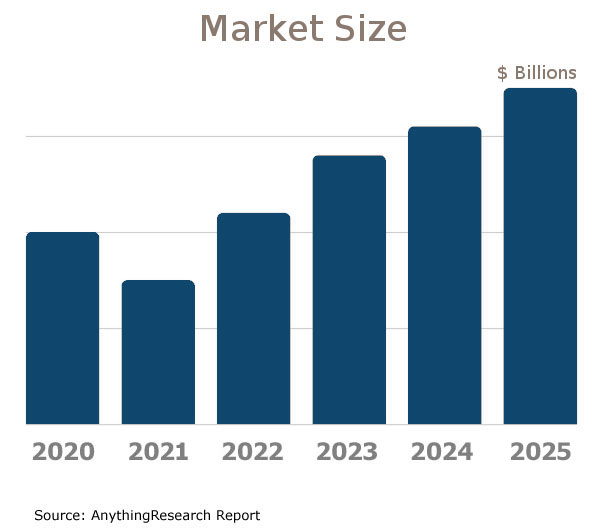
| Statistics | 2020 2021 2022 2023 2024 2025 | |
|---|---|---|
| Market Size (Total Sales/Revenue) |
Order at top of page | |
| Total Firms | ||
| Total Employees | ||
| Average Revenue Per Firm | ||
| Average Employees Per Firm | ||
| Average Revenue Per Employee | ||
Market Forecast
Market forecasts show the long term industry outlook and future growth trends. The following extended five-year forecast projects both short-term and long-term trends.
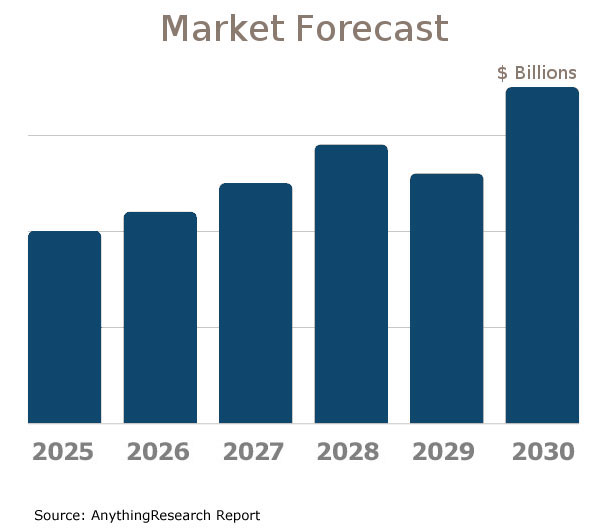
| Forecast / Industry Outlook | 2025 | 2026 | 2027 | 2028 | 2029 | 2030 |
|---|---|---|---|---|---|---|
| Market Forecast ($ millions) | ||||||
| Projected Industry Growth Rate (%) | ||||||
Product & Services Breakdown
Research products and services in the Fish and Seafood Retailers industry generating sales. Note that products are broken into categories with different levels of classification.| Product Description | Number of Companies | Sales ($ millions) | Percent of Total Sales |
|---|---|---|---|
Industry Total |
|||
Groceries & Other Food Items For Human Consumption Off The Premises |
|||
Frozen Foods, Including Packaged Foods Sold In A Frozen State |
|||
Fish & Seafood, Including Refrigerated Prepackaged Fish & Seafood |
|||
Meals, Unpackaged Snacks, Sandwiches, Unpackaged Ice Cream & Yogurt, Bakery Items, Other Food Items & Nonalcoholic Beverages Prepared |
|||
U.S. Geographic Distribution: Revenue Statistics by State
Market Size by State ($ millions) indicates how the industry's competition is distributed throughout the country. State-level information can identify areas with higher and lower industry market share than average.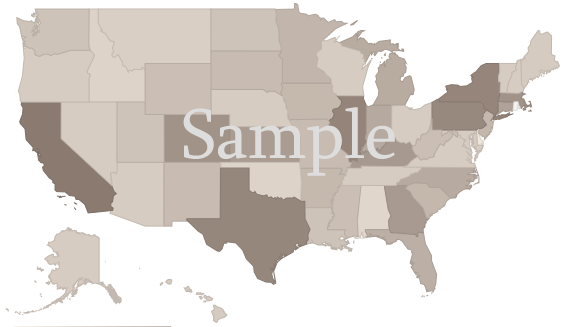
Income Statement (Average Financial Metrics)
Financial metrics provide a snapshot view of a benchmark "average" company. Key business metrics show revenue and operating costs. The data collected covers both public and private companies.| Industry Average | Percent of Sales (Industry Benchmark) |
|
|---|---|---|
| Total Revenue | Order at top of page |
|
| Operating Revenue | ||
| Cost of Goods Sold | ||
| Gross Profit | ||
Operating Expenses | ||
| Pension, profit sharing plans, stock, annuity | ||
| Repairs | ||
| Rent paid on business property | ||
| Charitable Contributions | ||
| Depletion | ||
| Domestic production activities deduction | ||
| Advertising | ||
| Compensation of officers | ||
| Salaries and wages | ||
| Employee benefit programs | ||
| Taxes and Licenses | ||
| Bad Debts | ||
| Depreciation | ||
| Amortization | ||
| Other Operating Expenses | ||
| Total Operating Expenses | ||
| Operating Income | ||
| Non-Operating Income | ||
| EBIT (Earnings Before Interest and Taxes) | ||
| Interest Expense | ||
| Earnings Before Taxes | ||
| Income Tax | ||
| Net Profit Net Income | ||
Financial Ratio Analysis
Financial ratio information can be used to benchmark how a Fish and Seafood Retailers company compares to its peers. Accounting statistics are calculated from the industry-average for income statements and balance sheets.| Profitability & Valuation Ratios | Industry Average |
|---|---|
| Company valuation can be measured based on the firm's own performance, as well as in comparison against its industry competitors. These metrics show how the average company in the Fish and Seafood Retailers industry is performing. | |
| Profit Margin Gross Profit Margin, Operating Profit Margin, and Net Profit Margin. Show company earnings relative to revenues. |
|
| Return on Equity (ROE) Return on Equity (ROE) is net income as a percentage of shareholders' equity. Shareholders' Equity is defined as the company's total assets minus total liabilities. ROE shows how much profits a company generates with the money shareholders invested (or with retained earnings). |
|
| Return on Assets (ROA) Return on Assets (ROA) is net income relative to total assets. The market research on Fish and Seafood Retailers measures how efficiently the company leverages its assets to generate profit. ROA is calculated as Net Income divided by Total Assets. |
|
| Liquidity Ratios | Industry Average |
|---|---|
| Bankers and suppliers use liquidity to determine creditworthiness and identify potential threats to a company's financial viability. | |
| Current Ratio Measures a firm's ability to pay its debts over the next 12 months. |
|
| Quick Ratio (Acid Test) Calculates liquid assets relative to liabilities, excluding inventories. |
|
| Efficiency Ratios - Key Performance Indicators | Industry Average |
|---|---|
| Measure how quickly products and services sell, and effectively collections policies are implemented. | |
| Receivables Turnover Ratio If this number is low in your business when compared to the industry average in the research report, it may mean your payment terms are too lenient or that you are not doing a good enough job on collections. |
|
| Average Collection Period Based on the Receivables Turnover, this estimates the collection period in days. Calculated as 365 divided by the Receivables Turnover |
|
| Inventory Turnover A low turnover rate may point to overstocking, obsolescence, or deficiencies in the product line or marketing effort. |
|
| Fixed-Asset Turnover Generally, higher is better, since it indicates the business has less money tied up in fixed assets for each dollar of sales revenue. |
|
Compensation & Salary Surveys for Employees
Compensation statistics provides an accurate assessment of industry-specific jobs and national salary averages. This information can be used to identify which positions are most common, and high, low, and average annual wages.| Title | Percent of Workforce | Bottom Quartile | Average (Median) Salary | Upper Quartile |
|---|---|---|---|---|
| Management Occupations | 2% | Order at top of page |
||
| Chief Executives | 0% | |||
| General and Operations Managers | 2% | |||
| Food Preparation and Serving Related Occupations | 12% | |||
| Cooks and Food Preparation Workers | 6% | |||
| Food Preparation Workers | 6% | |||
| Food Preparation Workers | 6% | |||
| Sales and Related Occupations | 39% | |||
| Supervisors of Sales Workers | 5% | |||
| First-Line Supervisors of Sales Workers | 5% | |||
| First-Line Supervisors of Retail Sales Workers | 5% | |||
| Retail Sales Workers | 33% | |||
| Cashiers | 28% | |||
| Cashiers | 28% | |||
| Office and Administrative Support Occupations | 7% | |||
| Production Occupations | 7% | |||
| Food Processing Workers | 6% | |||
| Transportation and Material Moving Occupations | 28% | |||
| Material Moving Workers | 25% | |||
| Laborers and Material Movers | 25% | |||
| Stockers and Order Fillers | 21% | |||
Fish and Seafood Retailers Competitor Landscape & Key Companies [PREMIUM]
The most influential companies in the Fish and Seafood Retailers industry and adjacent industries either have large market share or are developing new business models and methods that could disrupt the status quo. We look at leading and emerging companies in the Fish and Seafood Retailers industry and adjacent sectors:| Market Leaders: Direct Competitors Companies with the largest market share, focused in this industry |
Market leaders: Diversified Competitors Largest companies that have diversified operations in this and other industries |
| Innovators: Direct Competitors Innovative, Emerging, and Disruptive Companies that may influence the future direction of the industry. |
Innovators: Diversified Competitors Innovators and Disruptors in adjacent industries that may also affect the Fish and Seafood Retailers industry. |

Latest Industry News
- Major seafood name in court receivership - # A well-known Bahamian seafood provider has been placed in Supreme Court-ordered receivership after defaulting on debt understood to be worth between $1m-$1.5m. (07/08/2025)
- South Africa’s fish exports outrun inflation, gains global traction - Exports were led by fresh fish (40% of SA exports) and molluscs like cuttlefish and abalone (30%), with key markets including Spain (25.5%), Italy (18.2%), and the US (9%). The US dominates fresh whole fish imports, consuming 60% of South Africa’s fresh exports. (07/08/2025)
- McDonald’s UK ups pollock purchases to launch new Double Filet-O-Fish - McDonald’s UK is buying significantly more pollock for its new Double Filet-O-Fish, which it launched at its more than 1,560 restaurants nationwide on 1 July. The Double Filet-O-Fish has “twice the taste and two delicious pollock fish patties in crispy breadcrumbs, melted cheese, and creamy tartar sauce,” McDonald’s UK said. (07/08/2025)
- Local, frozen and wild-caught. What do these common menu descriptors for seafood really mean? - Defining local, wild-caught, frozen and imported seafood and shrimp as Charleston-area diners are more weary of shrimp labeling in restaurants and on menus. (07/08/2025)
- On Mexico’s Caribbean Coast, There’s Lobster for the Tourists and Microplastics for Everyone Else - The fishermen of Puerto Morelos complain of pirates who fish off-season with total impunity, while their small catches are contaminated by the abundant microplastics in the sea. (07/07/2025)
- Hot chicken, tacos, seafood restaurants are coming to Southside Jacksonville retail center - A popular Nashville-style hot chicken restaurant as well as new Mexican and seafood restaurants are planning to open at a Lakewood retail center. (07/02/2025)
- New law shifts seafood labeling rules - In an effort to protect local fishermen and consumers, Hawaii Gov. Josh Green on Friday signed House Bill 534 into law. According to a joint news release from the Hawaii Longline Association, United Fishing Agency and Hawaii Seafood Council, (06/30/2025)
- New laws mean restaurants and cafes will need to label seafood as imported or Australian - ABC News - ABC (Australian Broadcasting Corporation) - Since around 2006, "country of origin" labelling has been mandatory for packaged seafood sold in retail outlets. But these laws have not applied to restaurants, pubs or takeaway shops including ... (06/30/2025)
- Six endangered fish species found in fish maw from Singapore and Malaysia’s stores: Study - The DNA of six endangered fish species was found in fish maw products from stores in Singapore and Malaysia, a new study found. (06/28/2025)
- Saudi Arabia Frozen Fish and Seafood Market Outlook 2024–2032 Consumption Trends, Supply Chain Innovations, and Growth Forecast - Report Ocean has published a new report on the Saudi Arabia Frozen Fish and Seafood Market, delivering an extensive analysis of key factors such as market restraints, drivers, and opportunities. The report offers a detailed examination of industry trends and developments shaping the growth of the Saudi Arabia Frozen Fish and Seafood market. (05/26/2025)

